
Looking For Brake Repair Shops? Here Are 5 Things You Should Know Before You Go
Let’s be honest: nobody wakes up in Youngstown on a Tuesday morning excited to go look for brake repair shops. Usually, it starts with a tiny, high-pitched squeak when you’re pulling into the driveway after a long shift. Then it turns into a shudder in the steering wheel when you’re slowing down on I-680. Before you know it, you’re searching your phone for “brake repair near me” and bracing your wallet for the worst.
At Legacy Tire & Auto Repair, we’ve been family-owned and operated since 1978. In nearly 50 years of serving our neighbors, we’ve heard every horror story in the book: from massive upswells on parts people didn’t need to “budget” shops that use parts so cheap they start squeaking again before you even get home.
We believe that an informed customer is a happy customer. You shouldn’t have to be a master mechanic just to make sure you’re getting a fair shake. So, before you drop your keys off at any shop, here are five things you absolutely need to know.
1. A Real Inspection Involves Way More Than Just Your Pads
When you walk into a shop and say, “My brakes are squeaking,” a lazy technician might just peek through the spokes of your rims, see that the pads look a bit thin, and hand you a quote.
The Truth: Your braking system is a complex hydraulic network. Replacing the pads without looking at the rest of the system is like putting a new band-aid on a deep cut without cleaning it first.
A comprehensive brakes, steering, and suspension inspection should include:
- Brake Pad Thickness: Measuring exactly how much “meat” is left on the bone.
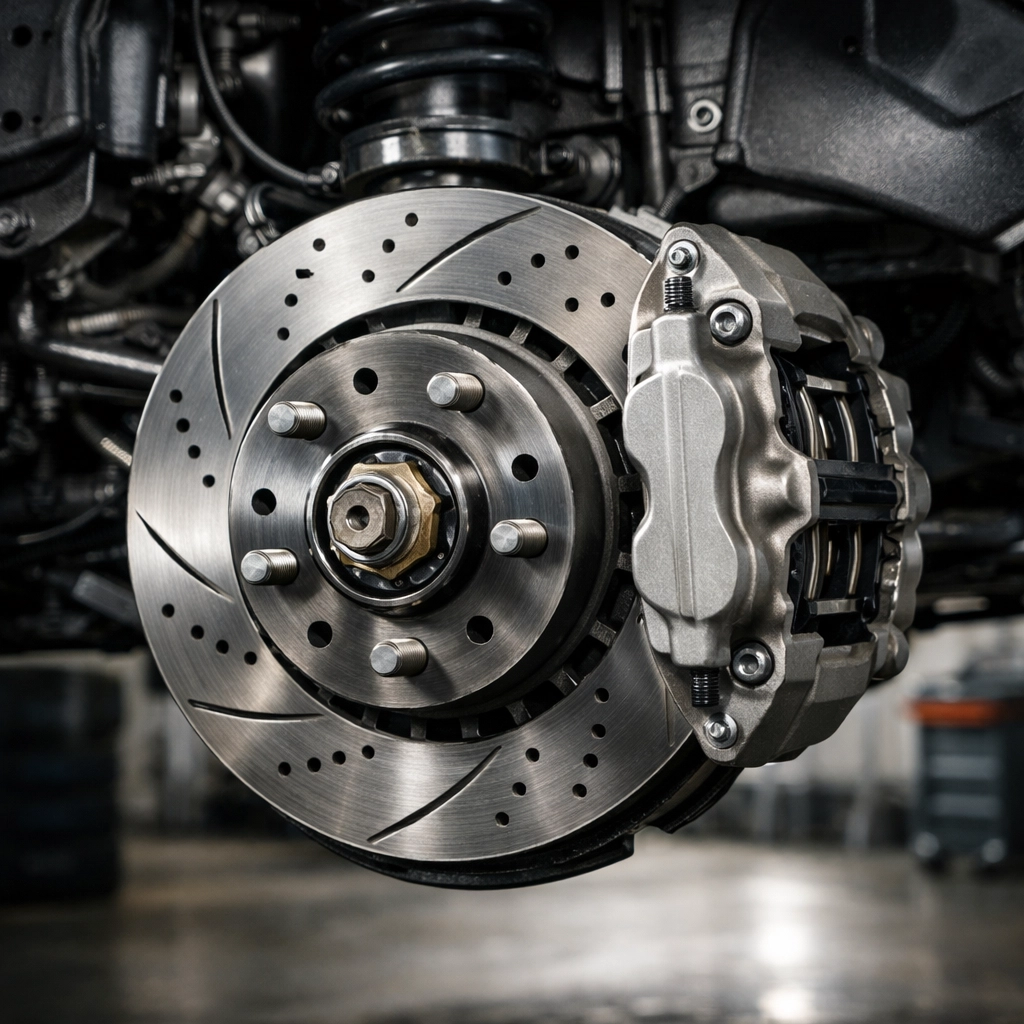
- Rotor Condition: Checking for “warping” (which causes that shaking feeling) or deep grooves.
- Caliper Function: Ensuring the “clamps” that hold the pads aren’t seized or leaking.
- Brake Lines and Hoses: Looking for cracks, bulges, or rust that could lead to a sudden loss of braking power.
- Wheel Bearings and Suspension: Sometimes what sounds like a brake noise is actually a hub assembly or a strut giving up the ghost.
If a shop isn’t checking your flexible rubber hoses for cracking or inspecting the rubber dust boots on your calipers, they aren’t doing the full job. At Legacy, we take the time to look at the whole picture because your safety isn’t something we gamble with.
2. Know the “Magic Number” for Replacement
One of the most common ways people get talked into unnecessary repairs is by not knowing the actual specs of their car.
The Truth: Most brake pads start at about 10mm to 12mm of thickness. As you drive, they wear down.
- 5mm to 6mm: You’re doing great. No need to worry.
- 4mm: It’s time to start planning for a replacement in the next few months.
- 3mm: This is the “Magic Number.” Most mechanics (and safety standards) recommend replacement at 3mm.
- 1mm to 2mm: You are in the “danger zone.” Your brakes could fail, or you could start damaging the expensive metal rotors.
Imagine if you went to the doctor and they said you needed surgery but couldn’t tell you why. You’d walk out! It should be the same with your car. Ask the technician: “What is the actual measurement of my pads?” An honest shop will give you the number in millimeters. If they just say “They’re low,” ask for the data. You can even check out our general preventative maintenance tips to see how we track these things over time.
3. Brake Fluid is the Lifeblood (And It Doesn’t Last Forever)
This is the most overlooked part of brake repair. You can have the best pads and rotors in the world, but if your brake fluid is bad, your car won’t stop correctly.
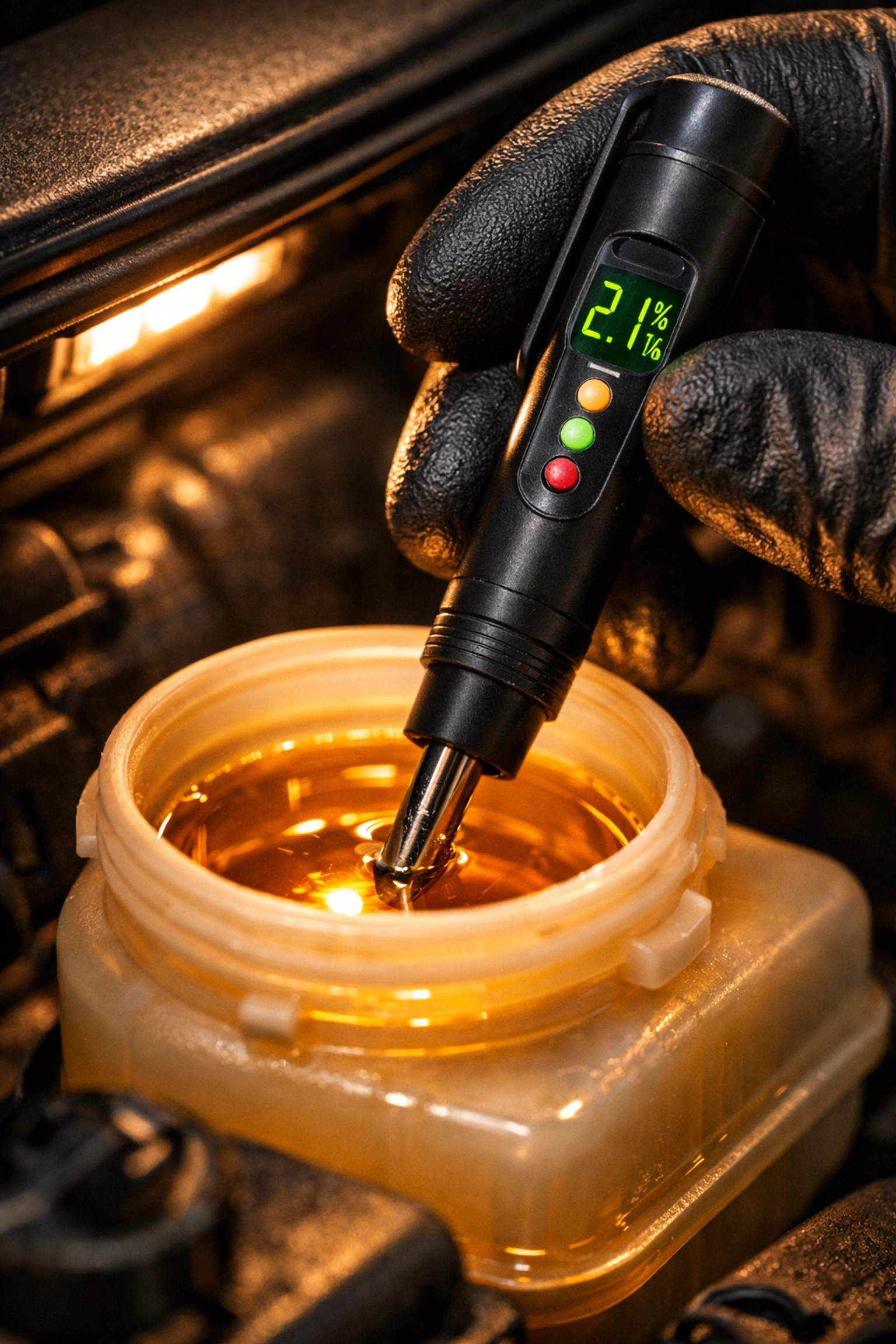
The Problem: Brake fluid is “hygroscopic.” That’s a fancy way of saying it acts like a sponge for moisture. Over time, water from the humid Ohio air gets into the system. This lowers the boiling point of the fluid (which is bad because brakes get very hot) and causes internal corrosion in your expensive ABS master cylinder.
The Solution: You should have a complete brake fluid flush every two to three years.
- The Eye Test: Fresh brake fluid is clear or slightly amber. If it looks like dark tea or coffee, it’s contaminated and needs to go.
When you’re looking at brake repair shops, ask if they test the fluid for moisture content. A shop that cares about the longevity of your vehicle: not just the quick sale: will always check your fluid levels and quality.
4. Learn to Translate the Noises
You don’t need to be an expert to have a good idea of what’s wrong. Before you head to the shop, try to identify exactly what you’re feeling and hearing. This helps you communicate with the mechanic and ensures you aren’t sold a “full overhaul” when you only have a minor issue.
- The Squeal: Usually, this is a small metal tab (a wear indicator) hitting the rotor to tell you the pads are getting thin. It’s an early warning.
- The Grind: This sounds like gravel in a blender. It usually means your pads are completely gone, and metal is rubbing on metal. This is an emergency.
- The Pulsation: If the brake pedal vibrates under your foot, your rotors are likely “out of round” or have uneven deposits on them.
- The Pull: If the car dives to the left or right when you hit the brakes, you might have a seized caliper or a collapsed brake hose.
For a deeper dive into these symptoms, check out our guide on squeal vs. grind vs. pulsation. Knowing the language helps you stay in control of the conversation at the repair counter.
5. Honesty and Heritage Matter
In a world of big-box chains and “fast-lube” joints, the “human element” often gets lost. When you’re choosing between different brake repair shops in Youngstown, look at their history.
Since 1978, Legacy Tire & Auto Repair has operated on a simple philosophy: treat every car like it belongs to our own mother. We don’t do high-pressure sales. We don’t have “quotas” for how many brake jobs we need to sell in a week.
Why this matters for you:
- No Upselling: If your pads have 5mm left, we’ll tell you they’re fine. We’d rather have your trust for the next ten years than an extra hundred bucks today.
- OE Quality Parts: We don’t use the cheapest possible components. We use Original Equipment (OE) quality parts because we don’t want to see you back in three weeks with a noise complaint.
- Community Roots: We live here. We shop at the same grocery stores you do. Our reputation is our most valuable asset. You can read more about us and our history in the Mahoning Valley to see why we do things differently.

The Legacy Way: Problem, Solution, Action
If you suspect your brakes are acting up, don’t ignore it. Small problems with brakes have a habit of turning into very expensive problems (like needing a full drivetrain and transmission repair because a seized brake caused overheating) if left alone.
The Problem: Your car is making a noise, vibrating, or just doesn’t feel “tight” when you stop.
The Solution: Get a professional, honest inspection that looks at the pads, rotors, fluid, and lines.
The Action: Call a shop that values honesty over a quick buck.
If you’re in Youngstown or the surrounding areas, we’d love to take a look for you. We’ll give you a straight answer, show you exactly what we found, and let you make the decision that’s best for your budget and your family’s safety.
Ready to get those brakes checked out by someone you can trust? Contact us today or swing by the shop. We’ve been keeping Youngstown moving since ’78, and we’re not stopping anytime soon!